Anzeige
Fauna Marin GmbH Tunze Fauna Marin GmbH Kölle Zoo Aquaristik Osci Motion

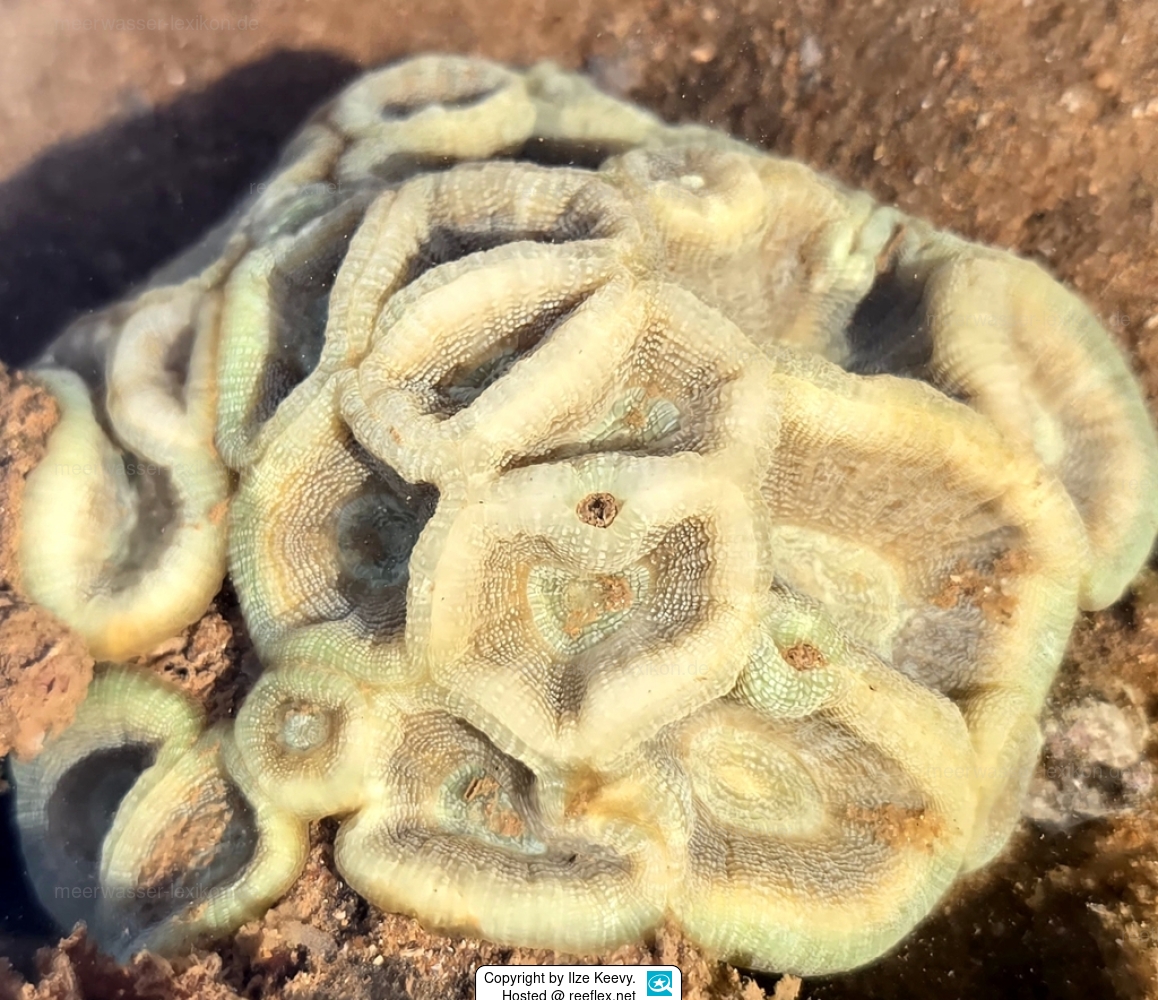
Moseleya latistellata Stony coral

Moseleya latistellata is commonly referred to as Stony coral. Difficulty in the aquarium: střední. A aquarium size of at least 150 Liter is recommended. Toxicity: Toxic hazard unknown.


Profilbild Urheber Dr. Ilze Keevy, Australien

Moseleya latistellata,Port Hedland, AU-WA, AU 2024


Courtesy of the author Dr. Ilze Keevy, Australien Dr.Ilze Keevy. Please visit www.inaturalist.org for more information.

Uploaded by Muelly.

Image detail


Profile

lexID:
2225 
AphiaID:
290380 
Scientific:
Moseleya latistellata 
German:
Breit-sternige Moseleya, Steinkoralle 
English:
Stony Coral 
Category:
LPS 
Family tree:
Animalia (Kingdom) > Cnidaria (Phylum) > Anthozoa (Class) > Scleractinia (Order) > Lobophylliidae (Family) > Moseleya (Genus) > latistellata (Species) 
Initial determination:
Quelch, 1884 
Occurrence:
Australia, Cambodia, China, Eastern Indian Ocean, Great Barrier Reef, Indonesia, Japan, Malaysia, Papua New Guinea, Philippines, Singapore, Taiwan, Thailand, Vietnam, Western Australia 
Sea depth:
10 - 12 Meter 
Habitats:
Intertidal zone, Tidal Zone, Seawater, Sea water, Soft grounds, Unconsolidated muddy grounds 
Size:
up to 7.87" (20 cm) 
Temperature:
75.2 °F - 82.4 °F (24°C - 28°C) 
Food:
Plankton, Zooxanthellae / Light 
Tank:
33 gal (~ 150L)  
Difficulty:
střední 
Offspring:
Possible to breed 
Toxicity:
Toxic hazard unknown 
CITES:
Appendix II ((commercial trade possible after a safety assessment by the exporting country)) 
Red List:
Least concern (LC)  
Related species at
Catalog of Life
:
 
Author:
Publisher:
Meerwasser-Lexikon.de
Created:
Last edit:
2026-04-19 18:18:55 

Captive breeding / propagation

The offspring of Moseleya latistellata are possible. Unfortunately, the number of offspring is not large enough to cover the demand of the trade. If you are interested in Moseleya latistellata, please ask your dealer for offspring. If you already own Moseleya latistellata, try breeding yourself. This will help to improve the availability of offspring in the trade and to conserve natural stocks.

Info

Moseleya latistellata Quelch, 1884

The following Infos are from AISM Website: Characters: Colonies are flat, submassive, usually disc-like, and sometimes free-living. Corallites are cerioid with a large central corallite (up to 35 mm diameter) surrounded concentrically with angular daughter corallites.

Similar Species: May resemble the mussid Acanthastrea (especially A. bowerbanki), which can have the same colony and corallite shapes. Acanthastrea has more fleshy polyps, much larger septal teeth and never has large paliform lobes. See also Goniastrea palauensis.

External links

  1. Corals of the World (en). Abgerufen am 03.07.2022.
  2. reefbuilders (en). Abgerufen am 07.08.2020.

Pictures

Commonly


Husbandry know-how of owners

am 03.07.22#1
Ich habe seit Jahren eine grün-blau-lila changierende Variante. Anfänglich ist sie rückwärts gewachsen, was aber mir anzulasten war, da ich nicht erfahren genug war und große Wasserwertschwankungen hatte, mit geringem pH und viel zu viel Nitrat. Naja, sie hat es überlebt. Mittlerweile wächst sie wieder vorwärts und versucht ihr altes Skelett auszufüllen. Ich finde sie sehr schön, die Fütterung ist aber heikel. LPS-Pellets oder feinere Pellets kotzt sie wieder aus, ich frage mich, ob ich ihr einfach zuviel davon gebe. Ausgewachsene Frost-Artemien scheinen auch nicht so optimal zu sein (obwohl die Koralle in Mundnähe einen ausfahrbaren ring an Tentakeln besitzt). Sie scheint mehr auf "Schleim-Einfang" feiner Partikel spezialisiert zu sein. SPS-Mikroflocken oder feiner bleiben am Schleim hängen und sie zieht ihn dann, wie ein großes Bettlaken (die Polypen sind ja recht groß), samt Futter in den Schlund.
Wächst quälend langasm, aber ich füttere auch nicht sehr häufig.
1 husbandary tips from our users available
Show all and discuss