Anzeige
Fauna Marin GmbH Tunze ICP Aqua Medic Kölle Zoo Aquaristik

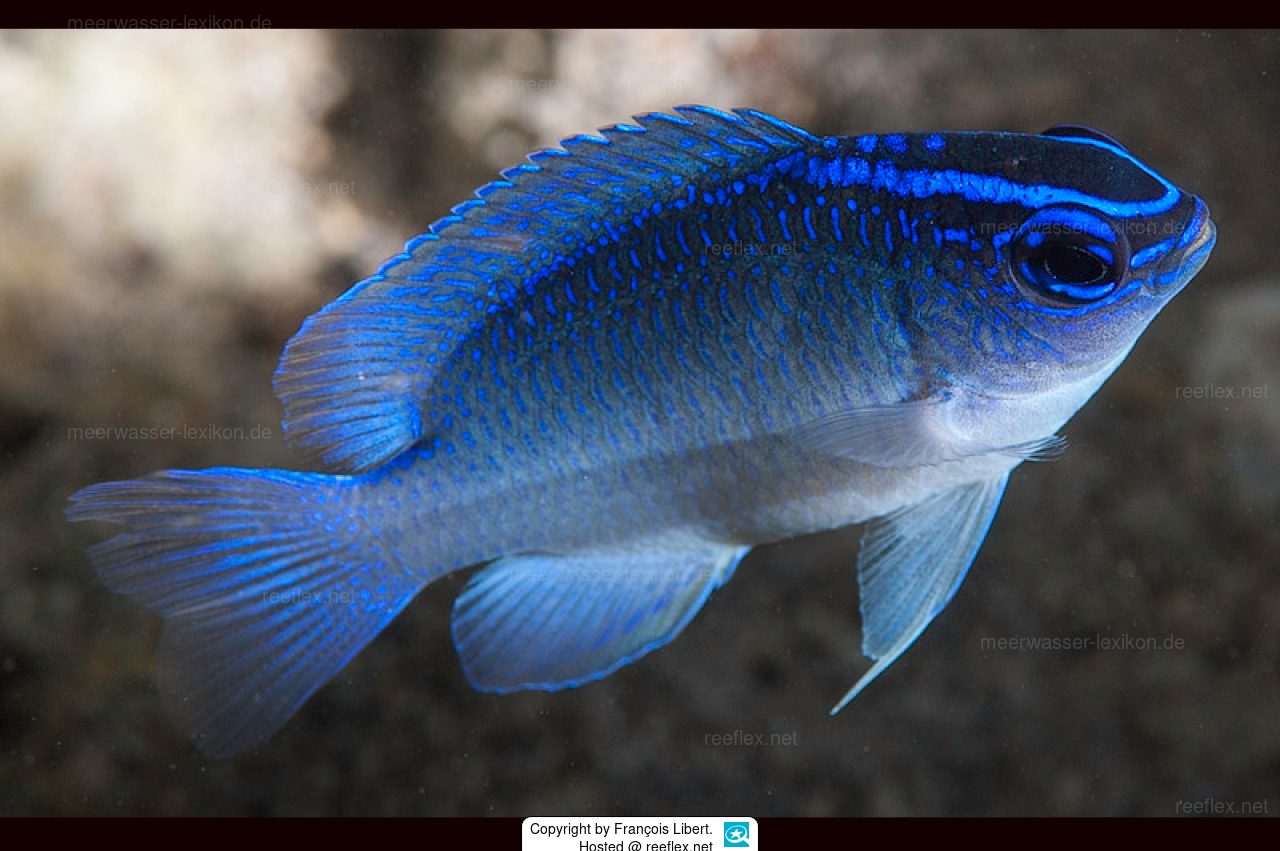
Chrysiptera glauca Grey Damsel, Mamo, Pale-blue Damsel, Sombre Damsel-fish

Chrysiptera glauca is commonly referred to as Grey Damsel, Mamo, Pale-blue Damsel, Sombre Damsel-fish. Difficulty in the aquarium: There are no reports available yet that this animal has already been kept in captivity successfully. Toxicity: Toxic hazard unknown.


Profilbild Urheber François Libert, Frankreich

Foto: La Réunion, Indischen Ozean


Courtesy of the author François Libert, Frankreich . Please visit www.flickr.com for more information.

Uploaded by AndiV.

Image detail


Profile

lexID:
10786 
AphiaID:
218783 
Scientific:
Chrysiptera glauca 
German:
Graue Demoiselle, Riffbarsch 
English:
Grey Damsel, Mamo, Pale-blue Damsel, Sombre Damsel-fish 
Category:
Sapínovití 
Family tree:
Animalia (Kingdom) > Chordata (Phylum) > Actinopterygii (Class) > Perciformes (Order) > Pomacentridae (Family) > Chrysiptera (Genus) > glauca (Species) 
Initial determination:
(Cuvier, ), 1830 
Occurrence:
(the) Maldives, Aldabra Group, Andaman and Nicobar Islands, Ashmore and Cartier Islands, Australia, Caroline Island, Celebes Sea, China, Christmas Islands, Cook Islands, Fiji, Flores, Gambier Islands, Great Barrier Reef, Guam, India, Indian Ocean, Indonesia, Japan, Kenya, Kiribati, Line Islands, Lord Howe Island, Madagascar, Marschall Islands, Mauritania, Micronesia, New Caledonia, Niue, Norfolk Island, Northern Mariana Islands, Okinawa, Palau, Papua New Guinea, Philippines, Pitcairn Islands, Queensland (Australia), Réunion , Samoa, Solomon Islands, South-Africa, Sri Lanka, Sulawesi, Taiwan, Thailand, The Chagos Archipelago (the Chagos Islands), the Cocos Islands / Keeling Islands, The Ryukyu Islands, the Seychelles, the Society Islands, Tonga, Tuamoto Islands, Vietnam, Western Indian Ocean 
Marine Zone:
Intertidal (Eulittoral), intertidal zone between the high and low tide lines characterized by the alternation of low and high tide down to 15 meters 
Sea depth:
0 - 3 Meter 
Habitats:
Estuaries (river mouths), Intertidal zone, Tidal Zone, Reef-associated, Rubble floors, Seawater, Sea water 
Size:
11,5 cm 
Temperature:
25,3 °F - 29,3 °F (25,3°C - 29,3°C) 
Food:
algae grazer, epiphytes feeder, Zooplankton 
Difficulty:
There are no reports available yet that this animal has already been kept in captivity successfully 
Offspring:
Not available as offspring 
Toxicity:
Toxic hazard unknown 
CITES:
Not evaluated 
Red List:
Least concern (LC)  
Related species at
Catalog of Life
:
 
More related species
in this lexicon
:
 
Author:
Publisher:
Meerwasser-Lexikon.de
Created:
Last edit:
2026-10-25 12:34:25 

Info

Chrysiptera glauca (Cuvier, 1830)

Synonymised names
Abudefduf caesio Seale, 1906 · unaccepted
Abudefduf glaucus (Cuvier, 1830) · unaccepted
Abudefduf modestus (Schlegel & Müller, 1840) · unaccepted > junior subjective synonym
Chrysiptera hollisi Fowler, 1946 · unaccepted
Chrysoptera glauca (Cuvier, 1830) · unaccepted (misspelling)
Glyphidodon modestus (Schegel & Mülller, 1840) · unaccepted > misspelling - incorrect subsequent spelling (Glyphidodon is an unjustified...)
Glyphidodon pallidus De Vis, 1884 · unaccepted
Glyphidodontops glaucus (Cuvier, 1830) · unaccepted
Glyphisodon glaucus Cuvier, 1830 · unaccepted
Glyphisodon modestus Schlegel & Müller, 1840 · unaccepted > superseded combination
Glyphisodon phaiosoma Bleeker, 1849 · unaccepted

External links

  1. FishBase (multi). Abgerufen am 07.08.2020.
  2. Fishes of Australia (en). Abgerufen am 07.08.2020.

Pictures

Adult


Juvenile

Foto: La Réunion, Indischen Ozean
1

Semiadult


Commonly


Husbandry know-how of owners

am 21.10.22#1
Ich pflege 3 Exemplare seit einem Jahr. Von der Färbung her habe ich sie bereits Adult erhalten. Am Überlaufschacht wurde jetzt ein Gelege angelegt. Es sind hellblaue Eier die zunehmend silbern schimmern. Das Gelege misst beeindruckende ca 10x20cm und wird von einem Fisch gut bewacht. Dieser ist der Größte der Gruppe. Bei stress werden die Flossen fast schwarz und auch der Körper wird ungleichmäßig dunkler. Jedes Tier hat seine eigene Nische im Riff, wo der Bodengrund fast vollständig entfernt wurde und verteidigt "seinen" Bereich gegen alle anderen Bewohner. Es wurden sogar schon Seeigel herausgeschmissen.
1 husbandary tips from our users available
Show all and discuss

Co je to?

The following is an overview of "what's that?" Entries that have been successfully determined and assigned to this entry. A look at the entertainments there is certainly interesting.